
To mean or not to mean,
that isn’t the question! Or is it? I’m sure everyone had heard something meaningless before. Maybe just a boring platitude, or a laugh-worthy lapalissade, or even a complex statement, that eventually boils down to a truism. But what makes something meaningless? Here’s a statement I think we can all agree has no meaning.
“The present king of France is bald.”
The present king of France? France??? This statement is meaningless since there is no present king of France. So what differentiates meaningful and meaningless statements? I would argue the only difference is verifiability. This statement cannot be verified, and is therefore meaningless.
Daytime
Can a statement be true and false at the same time? I wouldn’t say so. Let’s take for example,
“It is daytime.”
One could argue that is is daytime in China and nighttime in America, hence “it is daytime” is only half-true. But I don’t believe this is a generous interpretation of the statement. Let’s clarify what the speaker probably meant.
“[Locally,] it is daytime.”
Now that more generous interpretation can be verified, and I would say is more meaningful than the less generous interpretation of the statement. Now what would happen if we mixed the less generous form and the more generous form:
“[Locally,] it is daytime globally.”
Locally globally? What a blatant contradiction. Any statement that contradicts itself, by definition, cannot be verified!
Epimenides
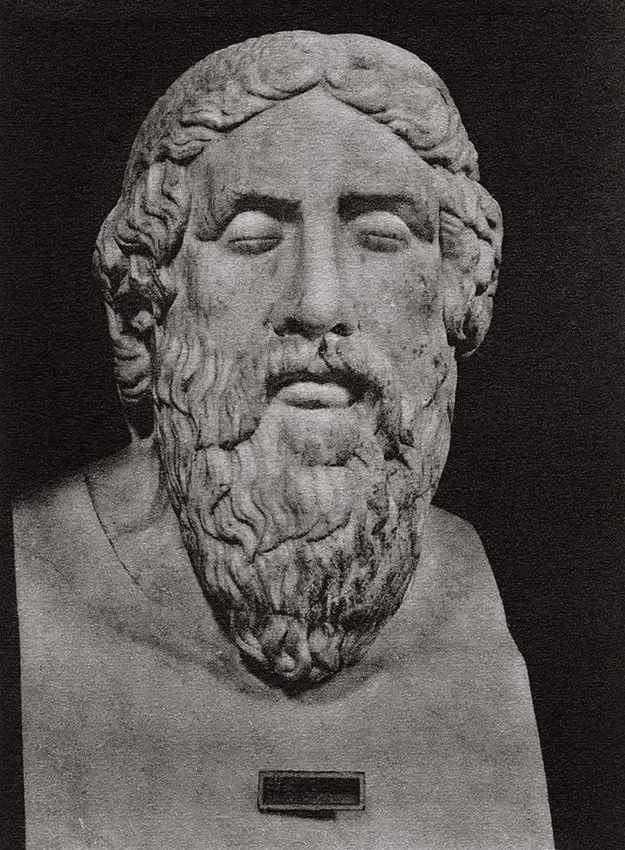 That’s the guy!
Finally, what about paradoxes?
“Epimenides was a Cretan who made the immortal statement: ‘All Cretans are liars.’” —Douglas Hofstadter
Let’s boil this statement down for simplicity:
“This statement is false.”
So what’s going on here? This statement doesn’t seem meaningless prima facie, yet what could the meaning possibly be? Let’s add a new rule: at the end of every statement, we can add the phrase, “is true.”
- “The car is red.” → “The car is red is true.”
- “This is a blog.” → “This is a blog is true.”
- “I like helium balloons.” → “I like helium balloons is true.”
Now I’d say that doesn’t change the semantic value of those statements whatsoever. You can probably see where we’re going with this.
“This statement is false is true.”
Something false being true? By law of the excluded middle we can rather say that the statement (or rather its semantic value) is nonexistent! It is meaningless!
Conclusions
That was a lot of text. Sorry about that! Maybe someone can make a meaninglessness detector and warn you when you say something meaningless!
That’s all,
Ilan Bernstein